Showing posts with label racism. Show all posts

Wednesday, November 15, 2017

Dress Codes and Anti-Blackness

In my experience, school dress codes are a frequent topic of debate, particularly amongst adults and teenagers. I’ve heard stories about girls being asked to change because their shoulders were showing, have seen girls get sent out of class for showing bra straps, and have seen boys get in trouble for sagging their pants (which is an understandably annoying trend, but I digress.)

Earlier today at school, a boy was instructed to take off his du-rag. I was uncomfortable because it was a white teacher ordering a black student, as I have recently begun to examine interactions between white teachers, who tend to hold positions of power because of their race, and their black students. I, having seen family members wear du-rags on bad hair days, initially thought it to be a ridiculous rule. The teacher said the red du-rag could be a symbol of gang affiliation. When I asked about headwraps black women wear, he also said this could be a symbol of gang affiliation. I was angry and also embarrassed, but I couldn’t understand why.


I don’t think I’ve ever had a bad teacher in my four years of high school, but all but one were white. I specifically coveted my single black teacher and his African American studies class for three years, finally fitting his class into my schedule after changing my lunch period. He often lamented the fact that African American History was an elective half-year course instead of being taught along in “normal” social studies classes. Since I learned so much from him, I agree.


It’s not just what I learned from him, though. I still go back and visit him because of the safety I felt in his classroom. If anyone saw him, they’d probably be afraid, because he’s a big black man with a deep voice. But I knew I could discuss microaggressions with him without facing ridicule, the first time I’d ever been able to do so with any teacher. I could talk to him about snide comments made about slavery or black people or black culture, about white kids who said the n-word, about situations that made me feel uncomfortable even when I didn’t understand why. He understands. White teachers, although they may want to, do see the microaggressions. In fact, they’re often perpetrators.


The teacher who yelled at the student wearing the du-rag is one of my favorites. I’ve had him for four years. But when he talked to me about gang affiliations, I got the feeling I often get when white people say things that make me uncomfortable. My stomach sinks and I grow silent. I don’t say anything because I still want their respect and don’t want to ruin a relationship. However, in the immediate moment, I’m not sure how to articulate why the situation seems wrong to me.
Here’s what felt wrong: a white teacher calling out a black student for a distinctive part of black culture. The idea that I wouldn’t be able to wear a headwrap to school. The fact that this was somehow because of the dress code.


We aren’t allowed to wear hats at school, but du-rags and headwraps aren’t hats. I checked the official dress code, but these accessories aren’t explicitly mentioned. Instead, the code bans “any combination of clothing which law enforcement agencies currently consider gang-related” while acknowledging that “these may change.” After reading this, I became even more uncomfortable. How does this rule work in real time? Do teachers single out students who appear as if they might be affiliated with a gang? Are they relying on stereotypes or old information? And, with the tension between black people and police, I wondered how much “gang related clothing” had to do with clothes black kids like to wear.


According to GQ, the durag’s “existence as a utilitarian marker of black cool loosely parallels the head wraps worn by women in slaver-era America.” Both share aesthetic roots in sub-Saharan Africa, but the different stylings express individuality. For the author and other black men like him, the durag became a symbol of black excellence. Similarly, black women have regarded the headwrap as a “helmet of courage,” and “a uniform of rebellion signifying absolute resistance to loss of self-definition.”


Durags and headwraps are elements of black culture and ways for black teenagers to express themselves while also maintaining a connection to their identity. However, they’re viewed as “gang related.” What does that even mean? I kept asking myself that question over and over again today.


According to Homefront Protection Group, “the leader in reality training for the law enforcement community in the United States,” some types of jewelry, clothing, accessories, and bandanas with certain colors or symbols could be gang representation. To me, this is entirely too vague and leaves too much room for adults, like teachers, administrators, or even police, to rely on their own notions of what gang representation is. Homefront provided their own example: a racially ambiguous (but brown) young person who looks like they could’ve been an extra on A Different World.
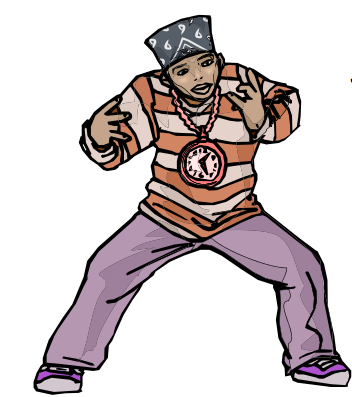

At what point do these arbitrary methods of gang identification infringe upon a student’s first amendment rights?


In Chalifoux v. New Caney Independent School District, a gang known as the “United Homies” wore rosaries at school, causing the school district to ban all students from wearing rosaries to school because they had become “gang affiliated.” However, not all students who wore rosaries to school were gang members. Therefore, a federal court ruled that the rosary ban infringed on the First Amendment rights of students to express their sincere religious beliefs.


Similarly, du-rags and headwraps are methods of expression for black students. Banning them in the name of “gang suppression” is a repression of black culture, and frankly, misguided. Gang violence is obviously a big issue, but research doesn’t support the position that school rules restricting student clothing have any significant effect on safety and security.  


Newspaper accounts and anecdotes are not empirical evidence. Feelings white teachers or administrators may have are not empirical evidence. The lack of evidence supporting the banning of du-rags and headwraps makes me wonder how much skin color has to do with the situation. There are gangs that only wear Ralph Lauren. Will teachers pull white kids wearing Ralph Lauren sweaters out of the hallways and force them to change?

Tuesday, August 29, 2017

"The Other Side"

Ever since Trump was elected, there have been a ton of messes. The most recent and horrific is arguably the tragic events at a gathering of white supremacists in Charlottesville, where a car plowed into a group of counter-protesters, killing a woman named Heather Heyer. 

Because of events like Charlottesville, there has been an emergence of "antifa," short for anti-fascism, a "far left fringe group." One of the reasons I haven't written anything about antifa is because I first heard about the group when Trump mentioned it. During a press conference after the events in Charleston, Trump asked, “What about the alt-left that came charging at the — as you say, the alt-right? Do they have any semblance of guilt? What about the fact they came charging with clubs in their hands, swinging clubs? Do they have any problem?" 

(Nevermind the fact that several people were injured and a woman lost his life. No, his first instinct was to focus on who to blame first. Anyway, I digress.) 

I didn't really believe what Trump had to say because he's Trump, and also because David Duke endorsed his comments. But, on Sunday, antifa showed up to an anti-racism protest at UC Berkeley, attacking Trump supporters and others they accused of being white supremacists. 

Jelani Cobb, an educator and writer at the New Yorker, wrote a piece where he declared that "the antifa protests are helping Donald Trump." When I first saw the headline, I was confused, because I hadn't heard about the violence and also because I figured that antifa were just that - against fascism. I was still confused and almost concerned when I finished reading. 

Cobb has an influx of people heading to his Twitter account, some calling him a sellout, which seems super dramatic. Nevertheless, I'm torn on the piece. Cobb has gone through a great deal of schooling, way more than me, and I also respect his work and writing. But I found that I disagreed. 

Before I get into it, his overall argument - that punching random Nazis is counterproductive - makes sense. It seems like punching any random person isn't going to help make anything better. It's not a horrible argument. I've seen many people share the same, rather articulately. 

I just don't understand it completely. 

Yes, we all want to avoid as much violence as possible. Yes, attacking people and accusing them of being white supremacists is bad. I don't think that there's a problem with self defense. Neither does Cobb.

<blockquote class="twitter-tweet" data-lang="en"><p lang="en" dir="ltr">The interesting point here is that I&#39;m not a pacifist. To paraphrase Obama on Iraq, I&#39;m not against violence, I&#39;m against stupid violence.</p>&mdash; jelani cobb (@jelani9) <a href="https://twitter.com/jelani9/status/902634630796410881">August 29, 2017</a></blockquote>
<script async src="//platform.twitter.com/widgets.js" charset="utf-8"></script>

My question is what constitutes stupid violence. I think that randomly attacking someone when you're unsure of who they are could be considered "stupid violence." But Cobb also references the protests at UC Berkeley that occurred earlier this year, when Milo Yiannopoulos was set to speak there. Protesters smashed windows and set fires, and Yiannopoulos didn't speak.

I don't think that was stupid violence. 

I think that Yiannopoulos is a horrible racist, among other things. He's referred to Leslie Jones as "barely literate," and called her a "black dude." He's called a Buzzfeed reporter a "thick-as-pig shit media Jew." He's harassed and outed a transgender student during an appearance at the University of Wisconsin.  He's called Black Lives Matter a terrorist group that fights "a war on police and a war on white people." He's said that Islam is cancer. He's said that trans people are mentally ill. 

Long story short, he's hate speech personified. 

Not wanting this person speaking at the school I intend (especially since he outed a trans student at a college appearance) is understandable. I remember having a conversation about this with my teacher. He worried that, if the "other side" couldn't share their views, we would soon lose this ability as well. 

"But what do you do," I asked him. "If their views are that you aren't a real person? That they hate you? That you shouldn't exist?" 

He didn't have an answer to me. 

It's because of this that I can't partake in this "both sides are at fault" argument. Perhaps Cobbs and I disagree, but I believe that merely having someone like Milo speaking at my school is an instance of violence. 

I don't think that black people or queer people or any marginalized person should have to bear the weight of hatred in order to help the "greater good." A student at UC Berkeley shouldn't have to listen to someone like Milo spew racist or transphobic ideas at their place of schooling. 

"Well Camryn," you say. "They don't have to listen. They can just sit there. They don't have to go. They can get up and leave."

But what does this say about the school that I'm going to? The mere fact that people refer to hateful ideas as "different opinions" only legitimizes them. When people support Trump, they back up his actions. When people identify as white supremacists, they don't believe that I am a real person. It's not a different opinion than mine. It's hatred, even if they don't physically attack me. 

Cobb referred to the both protests at Berkeley as "morally wrong." I can understand labelling the actions at the second protest that way, but not the first. What's morally wrong about starting fires and breaking windows when my school is fine with committing violence against me? To take it a step further, why should hateful Trump supporters or white nationalists be treated with non-violence when they don't offer us the same? 

Furthermore, I don't care about morals anymore. Heather Heyer has died. Because Trump reinstated the pipeline that gives military weapons to local police, more unarmed black people will die.  Because of Trump's actions and spot in the white house, more hate crimes will occur.
Because of white supremacy, more black people will be faced with violence. 

What I'm trying to say is that Trump supporters and white supremacists do not care if we fight back with violence. Well, that's false. I'm sure that they care, because it makes them upset. I agree with Cobb's point that these instances will be used to defend Trump, his supporters, and white supremacists. But so what? 

Martin Luther King was nonviolent and they killed him.

Anyway, the Civil Rights Movement of the 60s was accused of inciting violence. Eight liberal white clergymen accused MLK of being too aggressive and counterproductive (his response, Letter from a Birmingham Jail, is a must read.) People opposed the March on Washington because they thought it could create more violence. People called his demonstrations "excessive." 

In 1968, a black man wrote to King stating, "After knowing the honest truth about this and many other deaths caused by your calm riots, we as a body had rather not have any thing else to do with you or your so called righteous riots or better, righteous murders.”

No matter what happens, these people aren't going to be nicer to us. They won't play fair just because we do. I mean, before the American revolution, Loyalists were all, "Guys, stop throwing tea in the harbor. It's making us no better than us. We don't want to be stupid about this." And sure, our country is horrible to a lot of people of color, especially Native Americans, and didn't give us freedom or anything, but I digress. 

Cobb wrote that people like Nelson Mandela used "violence when it was efficacious, nonviolence when that was effective. Power came from understanding that." But when do we reach that point? How long do we suffer in silence, allowing people to spread racist and hateful ideas? 

To me, if a white person calls me a nigger, that is violence. If that white person gets hit, I think it's justified, because that is self defense. 

When white nationalist Richard Spencer was punched during an interview, I thought it was self defense. 

Of course, there are actions that antifa have made that I don't agree with. I generally don't want violence in general. But the fact is that it's here. When slave riots happened on plantations, slaves were blamed, even though it started with slave owners. When riots started in Ferguson, black people were blamed, even though the violence started with the police.

We face violence when we are non-violent. We face violence when we say nothing. We face violence when we fight back with violence. No matter what we do, they will always find something wrong with it. Even though I always think we can do better, I also know that people will find problems with everything we decide to do. 

White nationalists and white supremacy have started the violence. Their ideology is inherently violent. The core of their ideology is violence. I can't say that I blame those who fight back with violence. Survival is an essential aspect of the black spirit. 

Sometimes survival means fighting back.

Monday, December 19, 2016

who will tell the story?

One of my coping mechanisms is imagining the future. When I'm worried about a particularly stressful day of school, I imagine what it will be like to do nothing during summer vacation. When I'm irritated with my mother's rules, I imagine what it would be like to live alone in a few years. When I get jealous of characters in romance books, I imagine being in love in the future.

Donald Trump was voted as the next president, and there isn't a future I can imagine that will make this any kind of better. 

I keep thinking about all of the work people have been doing. Calling senators and representatives, writing pieces about all of the reasons why Trump shouldn't be president, and protesting right outside of Trump tower. All of it is swept aside, even the facts. 

People are so eager to ignore the fact that he's extremely racist, has a horrible record with women, has been accused of sexual assault, and is all sorts of mixed up with Russia. I haven't even touched everything. They'll ignore the fact that Pence doesn't care for the reproductive rights of women or LBGTQ+ people.  

They're both horrible, and I don't understand how this is just ignored. Republicans are people, after all, and I believe that they have common sense. My father's best friend is a republican, and I often wonder if he agrees with all of these ideas and statements. I wonder if all of the people who voted for Trump agree that people of color and queer people and women are less than them. 

They do. I can't come to any other conclusion. 

There are Trump supporters in my school, in my town. I can tell because of the statements made in class, but also because of the stickers on cars. Ever since Election Day, I've been extremely aware of my identity. Even the white people who said they weren't going to vote for Trump must have, since 58% of white people voted for him. 

As a black woman, I'm often in spaces that are dominated by white people. I've found that part of my experience is having to suspend disbelief. Part of being "respectable" is accepting the idea that most white people aren't racist, or at least pretending to. But how can I believe this after watching this election? How do we go from a gorgeous black family in the White House to this?

I've accepted the fact that I know more about racism than the white people who teach me. There are three black teachers in my school, and I haven't had any of them. I wish that I could see them everyday, if only for the comfort of knowing that there is another person of color around. I had to explain the concept of institutional racism to a teacher, and was exhausted by the end. 

It is exhausting, to constantly have to explain myself. Why must I constantly prove that there is a system actively working against people of color? Why do I have to bring in sources and argue in a calm voice in order to be considered? Even so, white people always have the chance to ignore me. I don't know if it's even worth it when I'm done. I'm so tired of this. 

Since Election Day, I've rejected the idea that only some white people are racist. I hate the way they use the word, as if it's some sort of insult. White people ignore the ingrained racism inside of them while pretending that race plays no part whatsoever in their lives. My teacher will lecture me about how black people can be racist while also making fun of the names of black students. 

She doesn't consider herself "racist," because to white people, it is an extreme. In order to be racist, they have to declare that they hate black people, or people from Mexico, or people with different skin colors. That definition is so rudimentary; it is almost as if it was taught in first grade and no one ever expanded on it. That might be because the concept of racism is never taught in school, not past the idea that MLK ended it all before he died. 

The fact of the matter is that our country is built on racism. It's still part of the fabric of this country, and no one has ever tried to pull it away. At this point, so far in our history, racism can not be distinguished from the characteristics of our nation. From the moment that the Constitution was written, black people were excluded. 

Cotton was the source of the economy for decades, because of slave labor. Black people have strengthened this nation with blood and bones and lynched bodies. We've received nothing in return. We were never even asked if we wanted this. And today, we act as if slavery is some distant system that no longer holds any impact on our daily lives. 

White people started off with a hundred year head start, and no one ever made them stop so that black people could catch up. They simply continued running, while we were forced to stop, over and over and over again. Now, we are blamed for our unequal status in society, if it is even acknowledged. We are told to work harder to move up, as if white people had to work through Jim Crow and lynchings and systemic racism while attempting to hold their families together.

White people are born into this system of racism, and many of them do not unlearn it. Black people are also born into this system of racism, but we are forced to learn. From the moment your parents give you the speech about working twice as hard, the moment your mother tells you how to behave around police, the moment you realize that you're the only "good" black child in your class. 

What a tremendous privilege it must be to go through life without being aware of this. Classmates, even teachers, tell me stories of how their ancestors immigrated to this country and built themselves up. I have no idea how my ancestors got to this country. I have an advertisement for a runaway slave, the earliest family member I'm aware of. I'm in awe of his bravery, but I don't understand how he and an immigrant from Poland is compared. 

The Polish immigrant was able to assimilate. He could lose his accent, his mannerisms, and look just like the white people who were already here. Eventually, people forgot why they hated the Polish, and they became apart of whiteness. This could never happen to my ancestor, because his skin was dark and could not be scrubbed off. He lived always looking over his shoulder, avoiding the white man and the KKK. 

Even though most southerners didn't own slaves, they were part of this culture. They believed that slavery kept their lives stable. They believed that black people were less than them. Even Abraham Lincoln was more interested in preserving the Union than abolishing slavery. I know that slavery could've ripped this nation apart, but is a country that only values a white man worth salvaging? 

Lincoln believed so, but perhaps this is because he knew his children would benefit. What a tremendous privilege. 

As my teacher told our class a story about her life, all I could think of was her privilege. She almost failed out of high school, but is successful today. I couldn't help but think about all of the failing black kids in my school who are ignored, except for when adults want to use them as scapegoats. 

"Don't be like them," they say, even if not explicitly. "They have no drive. They won't go anywhere." 

It is this same privilege that has allowed these white people to vote for Trump without a thought of the repercussions. They insist that they aren't racist, as if all it takes is to use the word "nigger." They ignore the fact that they play into this system, that they make behavior more acceptable by supporting Trump. 

They're eager to call out "radical Islamic terrorists," but are silent when it comes to Dylann Roof. I think this is because they know, at the back of their minds, that they created him. They created him with their comments: "black people take advantage of the system," "they're all drug addicts and can't get real jobs," "they're behind us because they're lazy."

They created him with their silence. Those who stand by for these comments are just as guilty. 

As far as I'm concerned, anyone who supports Trump is not my friend. I don't care that white people wanted a "change," that they chose this fate for our country while thinking only of themselves. 

I don't care that the electors wanted to follow in tradition. I didn't expect this group of mostly white people to save me, not when the concept of the electoral college is already rooted in racism. But I find it disappointing that I'm not yet old enough to vote, and I already don't trust my government. 

I don't care that people are burning flags and sitting down during the pledge. I don't care if you get upset that I refuse to acknowledge Trump as president. If these are things that you are worried about, talk to people like my parents, who are worried about how our lives will change. 

Talk to people like my Muslim friends, who are already terrified at rising hate crimes. Talk to my trans friends, who know the vice president does not care about them. Talk to young women like me, who worry about my reproductive rights with a GOP dominated Congress. 

This is not as simple as disliking the person who won. I am worried about my quality of life. I am worried about friends getting deported, families getting ripped apart. I am worried because this country stopped caring about me once I stopped picking cotton and taking orders. My heart aches for people like Van Jones, who do not know how to explain this fact to their children. 

I have come to one conclusion: white people voted against their self interest because they were afraid. Working class white people are upset that they are slowly fading from the focus. They desperately want to hold onto the times where they were the only ones who were important. When they say "make America great again," they mean times where uppity people of color weren't demanding rights. White people were afraid of losing the privilege this country constructed for them. 

I've been trying to think forward, four years from now, but I'm not sure what it will be like. I'm already apprehensive around white people, angry at all of them, even though I know it isn't fair. I just can't bring myself to care about fair, not when the race was never even from the beginning. 

Perhaps one day, when I'm older, I'll be able to talk to people about this. I'll tell them that I wasn't sure how to fight, but that I kept writing. I hope that writing will be enough. I hope that stories will be enough, as they have been in the past. No matter how hopeless I feel, I will keep telling them.

I owe it to those who came before, and those who will come after. 

(An ad for one of my ancestors, Isam, who was 25 years old when he escaped.) 

xo,
Camryn

Wednesday, July 6, 2016

A Heavy Load

What happens to a dream deferred?
Does it dry up
Like a raisin in the sun?
Or fester like a sore--
And then run?
Does it stink like rotten meat?
Or crust and sugar over--
like a syrupy sweet?
Maybe it just sags
like a heavy load.
Or does it explode? 
-Langston Hughes

I read A Raisin in the Sun today. I've been wanting to read it for a while, ever since I found out that Lorraine Hansberry, the author, was the first black woman to have a play on Broadway. Raisin made it to Broadway against all odds, though some theorize that it's because white Americans ignored the clear racial aspects of the play and instead chose to connect with the characters because "they were a typical middle class family." Because their problems and issues and feelings clearly were not influenced by their race. 

A few days ago, I read Ta-Nehisi Coates' The Case for Reparations. I've never given reparations much thought, just assuming that they would never happen because of how much money they would cost, money that we don't have at all.

Today, a video was released of a police officer killing Alton Sterling. He was armed, but in an open carry state. Because, you know, we're American and very into guns. What we don't talk about, but black people clearly know, is that this rule isn't meant for us. When people complain about their guns being taken away, they are white. 

Black people have never been able to have guns. The law says we are allowed to. The people disagree. The people are the government. The government is this country. "We, the people." 

I'm tired of respectability. I don't aim to earn the respect of someone who believes that a black person must have a fully formed debate ready whenever we state that our lives matter. I know that my voice is just one of many, that it might not be heard at all, especially since I'm so upset. That's fine. I'll stand with Michael Brown and Trayvon Martin and Tamir Rice and other teens whose voices will never be heard again. 

There is a fucking problem. It needs to be admitted. 
But that is not the only step. 

It is not simple enough for other people to just say "Black lives matter." For them to be silent on this issue. They don't even need to speak - they need to push for better laws to protect us, to put pressure on police departments. Of course, I write this having already made up my mind. I do not think things will change, not unless the police system is completely stripped down and changed. 

There is a fundamental problem. The issue is that so many institutions were founded with white people in mind, and they were never changed. In the Coates article previously mentioned, he makes several statements that resonated profoundly with me. He says that America has stacked up so many horrors, so many things done to black people, that were never acknowledged. He says it's like someone racking up debt on a credit card, then deciding not to use it, but being confused when the debt does not magically disappear.

The thing is that the debt continues to build. It grows and grows and grows. Black people can see it, but it seems as though no one else can. 

This is a heavy load that black people carry with them every day. Every single day. If you're not thinking about it, you see a cop staring at you and wonder if this could be the day that something happens. You wonder what picture of you they'll use. You'll wonder if you would've ever gotten the chance to make something of yourself.

It goes further than murder, though. Because that's what this is. Our people are slaughtered in the street. It is like Civil War "Reconstruction," like the 50s and the 60s that people think back to when they think about "real" racism toward black people. They think about strange fruit hanging from trees, the Klansmen standing in pictures and demanding that negroes leave. 

There is a petition calling for Jesse Williams to be fired from Grey's Anatomy for making his amazing speech at the BET Awards. I was called a nigger at least three times last week on Twitter for speaking about cultural appropriation. Justin Timberlake spoke down to a black man who told him to apologize for his appropriation and treatment of Janet Jackson. 

He won't acknowledge that he stole. That he stole our cornrows and our clothes and our way of speech. No, it was all his idea. It's cool, because we're "the same on the inside." But let a black person dress that way, wear cornrows, and they're ghetto. They won't get the same jobs. Timberlake can pull down Janet's costume, exposing her, and she'll be the one banned from award shows.

Black people are the ones who lose jobs, who are viewed on the same level as white people with crime records even when holding college degrees. We're the ones who get turned away after internships because of our hair, because of our manner of speech. Then the same white people take these things and deem them "cool", but only for them.

Guns are only for them. Happiness is only for them.

In Raisin, a family wants to move to a predominately white neighborhood. After closing the deal, a white man from this neighborhood offers to buy the house from them, paying even more on top of that sum. He came on behalf of his white neighbors. "You'll be happier in a colored neighborhood," he said. "You can't force people's hearts to change."

I thought about how that's still similar. How the worth of a home can go down after black people move in. How so much of the world is still segregated, specifically the major city I live close to - in Manhattan, black people live on one side of Park Avenue, where houses are falling apart and kids aren't finishing school, and white people live on the other, where there are chauffeurs and chances and hopes and dreams and happiness.

Money buys happiness. It does, really. Tell a black kid living in Flint that money wouldn't buy them happiness. Tell any black kid that, because we tend to be stuck in poverty. In apartments breaking down, like in Raisin, in places without sunshine. Here is where we should be happy. 

In Raisin, no one wants the sister to be a doctor. White people do not want us to move up, to change things. They tell us that we would be better off if we worked harder, but that's not true. We work hard just to stay in the same places. We're stuck. All because of money that was stolen from us years ago, where white people were earning money. White men were earning money they passed through their families, while black people were sharecropping, receiving faulty loans, not being eligible for programs that could've helped us.

White people were given a head start, and we were held back. Somehow, we're measured on the same scale, despite these major differences. 

In Raisin, the main male character speaks of all he wants to do. Of what he wants to give his son. Of having the freedom to pick, to fly, to soar up high. Of being able to move up the ladder, to actually live the dream that America is known for. He wants his hard work to count for something. He does not want to be stuck, nor does he want this for his son. 

I feel the same. I want to be remembered. I want to make art that people love and take in over and over again. Even more, I want security. I want money, no matter how much I'm lectured about it. I want to have enough to ensure a future for my family, for others, for myself. I want to be able to have power. I want to bypass all of the white gatekeepers who have so much power. I want to provide ways for other black people, for us to tell stories. For us to write bestselling books and win Oscars and any other things that we might think to be unbelievable. 

But then I look at the black people being killed in the street. 

I look at how things do not change. I look at how many times this happens. 

I grow tired of saying the same things. I see my brothers and sisters growing tired.

I do not want to be too tired to be rich one day, to have a production company, to make movies and plays and books. I fear that this will happen. I fear that I will die before this happens. I fear that my dreams and my goals will be stolen away from me. I fear that I'll fall into a cycle that my family has, that so many black people have, of being stuck. Of being poor, unable to move.

I'm scared of being slaughtered in the street like an animal. I'm scared of the people who are supposed to protect me. I'm scared of white people.

But even more so, more than being scared, I'm angry. 

White people steal. They steal and steal and steal. They steal our bodies and our hopes and our dreams and our chances. This is murder, it is gaslighting, it is abuse. It is outrageous. It is disgusting. It is despicable. It has to be proven, over and over again. It is ignored, because white people benefit from it. They benefit from us being down, by the system in place and built into, by living in their own worlds. 

You telling me Black Lives Matter is the bare fucking minimum. Don't act like you're doing something for me, when this is known to black people. When we say it all of the time, even when we're ridiculed and killed and torn apart. Even when we walk the streets and protest and bring this to court. Nothing is changing. 

What am I supposed to do about it? 

I suppose that I'll wait for it to explode. When riots happen, black people are called animals. They're just waiting for an excuse to dehumanize us, and they love when we act like normal people and they can use it. If these things happened to white people, there would be riots from everyone. Black people riot because we're in pain. Because we're ignored.

Because, what else are we supposed to do?

Camryn

Saturday, April 30, 2016

excuse me my nigga

I'm back! Here I am, writing because the White House Correspondents Dinner is today, Larry Wilmore hosted, and it was brilliant. I'm going to miss Barack Obama so much that I can't even describe it. 

Moving on, Larry said "nigga" during one of his jokes. And I'm trying to beat out all of the think pieces from white writers who will write about why the word makes them uncomfortable and why it shouldn't be said. 

I'm so not about this. Like, at all. 

Earlier this year, I went to a meeting for a school club. People from my school follow me on Twitter now, so I won't get too specific, but we were talking about how other schools aren't nearly as "diverse" as ours is. I don't know how it led to the conversation we ended up having, but I remember talking about code switching. I talked about how there are differences in the way black people talk to other black people and the way they talked to white people.

I said that white people should not be saying nigga. And people got upset, including one of the teachers, who felt it necessary to say that she was Italian (because somehow that makes her more qualified to speak on the subject?) and that no one should be saying the word because it's disgusting.

I didn't get the chance to say anything else, because another black student agreed with her. And there was a bunch of applause, which drowned me out. Anyway, I won't tell you about how I took a survey of black students, asking them about how they felt about the word. That I ranted to my black friends. 

I'm going to tell you why this discussion, mainly having it with white people, irritates me to no end:

1) White people made up the word, and black people have repurposed it: Nigga was originally a word seeped in hate. I know that, and you know that. We all know that. But when black people say it, they're using it in greeting. They're using it in a way to call out to friends, to describe themselves. 

When I try to explain this, I usually compare it to women calling themselves "bitches" - something that men often do as an insult. They're owning the word, changing it into something else so that it can no longer be used to hurt them. That's what black people do with nigga. 

2)  THE SELECTIVE PEARL CLUTCHING:
Okay, pearl clutching is pretty self explanatory - it refers to old movies and such where women used to clutch their pearls in shock and dismay. It's a term people use to refer to the shock and dismay of others in an annoying way, to boil it down. 

Examples of things people clutch their pearls at: kids running around without shoes, someone getting upset at teen sex being displayed in YA, people getting upset about cursing. Little things that they just get upset about for no real reason. 

Anyway, I love how white people love to get all upset about what a horrible word nigga is. Of course, they understand more about racism than the black people who use it. Of course, amidst all of the other shit black people have to deal with (including poverty, death at the hands of police, being treated as second class citizens, etc.), this is one of the things they get super upset about. Why? 

3) The entitlement: 
When white people tell me that nigga is a horrible word that no one should be able to say, this is what I hear: "Since I can't say it, no one else should be able to say it, either." 

It's a word for black people. I get that it can be difficult to come to terms with a word your ancestors probably said (or still do say) casually, and that there's so much hatred connected to it. That's something valid that you sort of have to deal with. If you told me you felt uncomfortable when people said it because you hear mean grandparents say it, I get that. If you were my friend, I probably wouldn't say it around you. 

That doesn't mean you can just say no one gets to say it. It's like someone who is a vegetarian because they hate the way animals are treated trying to tell everyone they can't eat meat. Go ahead, argue if you'd like - obviously not all of the time, because that gets irritating and I'd drop you. But to presume that a word should be discontinued just because you feel guilty/bothered by it is SUCH an entitled thing to believe that I can't even run with it. 

4) The superiority complex: Okay, this goes along with the whole theme of tone policing, but still applies to the nigga conversation. I remember sitting in school the day that meeting and thinking about how pompous that teacher sounded.

I have to stop here, because I have to say she's not a bad person. At all. I don't think this woman is horrible or anything because of how she approaches this word. I know many white people who think nigga is a horrible word (which I understand) and think no one should say it. So, the fact that I'm critiquing her on this doesn't make her horrible. She's actually lovely, and good about other things.

Anyway. 

When people tell me that black people shouldn't be saying nigga, they sound paternal. It makes more sense in my situation, because she was a teacher and I was a student. But a lot of times there are grown white people saying this to grown black people. Adults. 

It comes across as white people going, "Oh dearie, you don't understand that we created this word to hate you even more. This must be an inside joke of sorts, because the blacks don't get it. Since I'm a nice white person, I'll let them know." 

The fact is that black people don't have to be educated on the subject - and not on tone or dialect as a whole. Lots of times, you get people going, "Sweetie, you sound too angry. I can't understand you." I see people saying this to black women when they discuss how their sons were murdered in the street. 

Black people can be talking about something super important, like being poisoned or treated horribly or being in poverty, but white people will still critique their tone. It's just a way for them to avoid the subject, but also exert this false sense of superiority. 

"The way I speak is correct, so you must emulate it." 
"No one can take you seriously if you're so emotional." 
"Since you speak with slang, you must not be intelligent." 

And so on and so forth. The fact of the matter is that a black person could have  PHD, could be speaking in textbook terms, could have references and a speech prepared, but if a white person doesn't want to hear it, the conversation is shut down. 

5) They bring up the discussion in the black community as a "got-cha:" This is the part I hate the most. I remember how betrayed I felt when I sat in that chair, surrounded by white people and black people who didn't agree with me. 

Black people have a right not to want to use nigga. They have a right to disagree with it. It's sort of like how I say "queer" all the time, and identify that way, but some older LBGTQIA people find it offensive. It's different depending on who you are and what you've experienced. 

If I had been given the choice, I would've chosen to speak to white students, black students, and other non-black POC all at different times. It might sound...I don't know, stupid, but it's really difficult to speak up about things like this in real life. I know that I know what I'm talking about, but black people might disagree. And that's fine. But it sucks to feel so small and like people are ready to jump on you, while the people you look forward to for support are "on their side." 

(There are no sides, but that's how I felt in that moment.)

Anyway, white people are allowed to have feelings, as I said previously. I know that a lot of white people don't like to use it because they grew up during the 60s/70s/80s and experienced the word being used with hatred in abundance. However,  they just don't get to control whether or not black people use the word. And I'm not about to argue with a teacher about it, because...

Well.

As for black people - I personally don't mind the use of the word, but I don't mind discussing the topic with black people. It's just that I think it should be a discussion to be had in the black community. I truly don't think that we're going to get everyone to stop saying nigga, especially since it's not seen as overly negative when black people say it. 

But again, I know that I don't say it around my parents or grandparents because - well, first of all, they'd probably hit me - but also because they grew up in a different time. I think my parents were in their late teens (ha, they'll kill me if they read this) when groups like NWA were first getting popular. 

My mom remembers moving into an all white neighborhood and "Go back home niggers" being spray painted on their garage. My grandmother remembers that people used to call her father "Uncle" instead of "Sir," a sign of disrespect in North Carolina when she was growing up. There are a lot of reasons why black people don't like the word, and don't want it used. 

But it's our word to decide on, and we don't need any help from the white community.

xoxo.
Camryn 

PS: NON-BLACK POC SHOULD NOT BE SAYING NIGGA, EITHER! There is anti-blackness in lots of different cultures, which makes me sad, but there are black slurs used for black people in lots of different languages. I feel it's different with POC, because they understand a lot of what it's like to be treated this way by white people, but there are still differences.

Sunday, October 11, 2015

this is how the industry lives now: five signs that you might be suffering from white privilege

Hey! It's been a bit of a while since I last wrote a blog post, but this was very much needed. I often write about issues that are in the young adult literature community, meaning that a lot of people don't know about them (besides my peeps on Twitter, anyway.)

But the discussion of writers from the majority and their privilege has come up again. 

So, basically, many people on Twitter are upset with Ms. Rosoff's response (including myself), and I'm going to analyze her white privilege in both this response and how she is handling the backlash.

(First, I want to thank Laura Atkins for being super cool. Because I probably wouldn't started making sarcastic backhanded insults, and she stayed cool.)

1. "Good literature expands your mind:" Okay, but good literature expands your mind by teaching you about other people. We've been solely talking about white people and their issues for hundreds of years. No one is saying that you should stop doing this, but why do we ONLY need to talk about white people? I read so that I can learn about the world, about other people. Not to get a comprehensive backstory on one type of person.

2. "There are thousands of books:"Where? Do you know any of them? Do you know that there are thousands of books about white people, and yet, we're still expected to read them? In the past, white books were all that were offered. Racial minorities are just beginning to have their stories told. Yes, there have been many success stories, but for each of those, there are about ten authors being shot down.

PS: Stories about racial minorities written by white people don't count. 

3. She's writing a book about a black boy who falls in love with a Native American woman fifteen years older than him! Imagine that! So, you know, obviously she can't be racist. Because she's going to write a black boy (who will probably be horribly done) (not trying to hate but it's true) being abused by an older Native American woman! People who do that definitely aren't racist. 


4. Her first book was white as Vermont in the winter. Seriously: I'm fifteen, so there are lots of authors who wrote books way before I was old enough to read them. But I can say, with total honesty, that I didn't know about Meg. She's actually a pretty successful writer, but her books were published when I was still in elementary school. 

Her first book, How I Live Now, won a Pritz Award and was made into a movie. I've never read it, so I don't know if I would like it...but I do know that it's sooooooo white.  Sigh. I guess that explains some things?

5. She has blocked everyone who opposes her on Twitter (pretty much everyone.) This isn't something that you can google to figure out, but I promise that it's true. Just ask...anyone on Twitter who openly disagrees with her. It's funny to me, because the white people who need to hear these conversations usually are the ones who don't want to listen. 

Plus, I don't understand who she expects to buy her books, but alright.

Bonus round: 
I'm going to include five instances of white privilege that is ingrained in the publishing industry (but also many other media industries, such as the film industry or even the news industry): 

1. Racial minorities who write stories about themselves and are vocal about the fact that they aren't heard are branded as having some sort of agenda, when all they want to do is tell stories. Ava DuVernay has spoken about how she wishes that she would be asked about her film and technique instead of just asked to talk about the racism over and over again in the industry. 

It gets exhausting. Once you talk about a problem, you're expected to only talk about that. Or even worse: some people, like our buddy Meg, might think that you're pushing some sort of "agenda." Whatever that means. White people who tell their stories are just story tellers. 

2. "I'm uncomfortable when everything is not about me." This is a major white privilege thing, and it's basically how I describe white authors who get upset about more books being written by racial minorities. It's often (not) a subconscious thing, where white authors are happy to write "diverse" characters but become hostile when "diverse" people write these characters on their own. 

3. White mediocrity: This is more of a concept, but I'm happy to explain. While there are white authors who are amazing and fantastic and produce great works, there are also white authors who...are just okay. Or even bad. But they're celebrated and given awards and praise for being mediocre. 

(This isn't just a thing with books, by the way. I see it all of the time with films, TV, and music. But I digress.) 

Meanwhile, people of color are held to actual standards (that sounds rude, but whatever.) They have to work to be good, and sometimes that isn't enough. Basically, white authors can get on the NYT Bestseller List for being "okay." A Hispanic author has to be "fantastic" to get the same thing. White authors have to be "fantastic" to win a National Book Award. Black authors have to be "outstanding" to be considered.

Do you get what I mean? 

4. White authors will get recognition for writing racial minority characters that are horribly done. This is just a step up from the white mediocrity. When the industry/readers of young adult started calling out for more diversity, I guess many people assumed this meant that the white people were supposed to start writing characters of color.

That's....not exactly what we mean. 

Because, while this has led to some really cool books, this has also led to some (excuse my language) lazy ass authors writing people of color through their white eyes. That's...no. That's not how it works. By writing people of color the way white people see them (through a racist lense, to be honest, because of institutional racism but that's a story for another day), an actual character isn't being portrayed. A stereotype is. Usually an insulting one.

BUT. White authors get praised for this! I've seen it happen so so soooo many times. We're expected to be happy that we're included, even if it isn't done well. And then, if a white author writes an insulting black character and we call them out for it, the white author throws a fit.

(I'm thinking of a specific example, but I digress.)


5. White people are angry about racial minorities writing their own stories (and being good at it), because now they actually have to work hard. My personal theory is that white people are on the defense, because storytelling as they know it is coming to an end. They can't avoid these "diverse" characters, or even write half-assed versions of them, because a minority will blow them out of the water. They're realizing that white mediocrity won't hold up forever, so their solution? To keep racial minorities from telling their stories in the first place. 

Don't let them. This is how the industry lives now: diversely. 

xoxo,
Camryn

Tuesday, September 22, 2015

I'm Angry That Viola Davis Made History

“The only thing that separates women of color from anything else is opportunity.” 

Viola Davis is an inspiration. 

I am totally in love with her and her work. Her speech was phenomenal. I was so excited when she got up to that stage, and every single thing that she said was so on point. You guys don’t know how much I love this woman. 

But I’m angry. I’m angry that I saw this woman, up there, crying as she became the first black woman to win the Emmy for best actress in a drama. I’m angry as hell. There are so many black women with talent, and they’re barely recognized. Are the Emmys trying to tell me that there has only been one black woman, in all 67 years, that deserved this award? 

Some people will try to tell me that this is about talent. To that, I scoff, clench my fists, and try not to scream. 

Let’s talk about the fact that, according to a report from the Writers Guild of America, only 13.7% of television show staff writers are minorities - and this figure was taken of both women and men. Let’s talk about the fact that the amount of women of color in writer’s rooms actually decreased this year.

Let’s talk about how only eight black women have won Oscars, and how no black woman has ever won the award for Best Director. We can talk about how this isn’t about lack of talent: a big example is from March, when HBO held a contest for “diverse” female and male writers of color, allowing eight winners to receive training and support to help them produce a TV pilot. How there were so many applicants that the site crashed. 


And if you still need some proof, we can talk about how Nancy Lee Grahn said that the Emmys are not “a venue for racial opportunity” and that Viola Davis “has never been discriminated against.” You know, even though she’s a white lady and has never been a black woman. We can talk about how, during her apology, she said she “never expected every black Twitterer to attack.” 

Okay. 

For a black young woman who wants to be in this industry, this is heartbreaking. For crying out loud, this is disappointing for black women everywhere. The fact that black women are still made to feel inadequate, even while they have the same talent as white women. This is why it’s so important to have women of color as film studio executives and producers, so that they can pull other women up with them. 

Patricia Arquette brought up important issues about women in Hollywood, about women in all industries. Why can’t Viola Davis do the same for women of color?  While feminism is trying hard to make things better for women, we have to help all women: brown women, Asian women, trans women, queer women. You can’t leave half of us hanging. 

I’m not angry about Viola’s win. She deserved it, and I will vouch that from the rooftops. But black women shouldn’t have had to wait so long for recognition. Don’t forget about us. We have just as many stories as we do. 

xoxo, 
Camryn

Sunday, August 30, 2015

the white and black of being problematic

A lot of times when I talk about racism, I do it from a black young woman's point of view, because that's what I am. And it's really hard for me to consume media without seeing things in a black and white way, if that makes sense. 

Anyway, the VMAs were hosted by Miley Cyrus. I pretty much was on Twitter the entire time, and I noticed that a lot of people were angry with her because of cultural appropriation. For example, she called Snoop Dogg her "mammy" (the submissive black character from Gone With the Wind), and wore dreads, among other things. 

So, a lot of people were irritated. Myself included. I understand the strides that Miley has made in terms of gender and sexuality, but it's pretty difficult for me to think of them when it feels like she's insulting black people, even if she doesn't realize it. 

People have pointed this out. People keep saying that she doesn't understand that she has white privilege, and that seems to be excuse enough. We can't hold her responsible for what she's saying because she's still a child, apparently. 

She brushed off Nicki Minaj after insulting her, and Nicki cursed her out, which some people say wasn't classy. I noticed that, when Kanye went up to make his speech, a lot of people were done with him. And sure, Kanye can be confusing. He can be problematic, of course, because we all can.

My point is that, whenever black people are problematic, people JUMP on them. And that's totally what should happen, of course, without a doubt. But when white people are problematic, especially white people who claim to be fighting to equal rights (such as Iggy, Miley, Taylor, and Macklemore), we can't say anything.

It's because they're trying their best. It's not their fault that they have privilege. They just don't understand. 

I've noticed that, just because a famous white person does one good thing, they basically don't have to be held accountable for anything wrong that they might do. Which is an unhealthy attitude. 

So sure, Miley has made strides for white genderfluid people. Iggy advocates for white women. I have to specify, you see, because when they turn around and appropriate other cultures I know that they don't want to include people of color.

That's why, even though Nicki and Kanye can be extremely problematic at times, I still clap when they appear on stage. I'm still happy when they call out people and institutions. Black people don't have a whole lot of a voice, especially in the entertainment industry. White kids have people advocating for them, and we have black people advocating for us.

The idea, you see, is to try to get us all advocating for each other. But that isn't going to happen unless we are all educated, which means holding others accountable for being problematic, especially in a public space.

Lastly, if white people can still be celebrated for their accomplishments while still being problematic, so can people of color.

xoxo,
Camryn